Do cat scratchers actually work?
A cat scratcher works when it's the best scratching surface in the right place. Here is why cats scratch and how to make the new scratcher win.
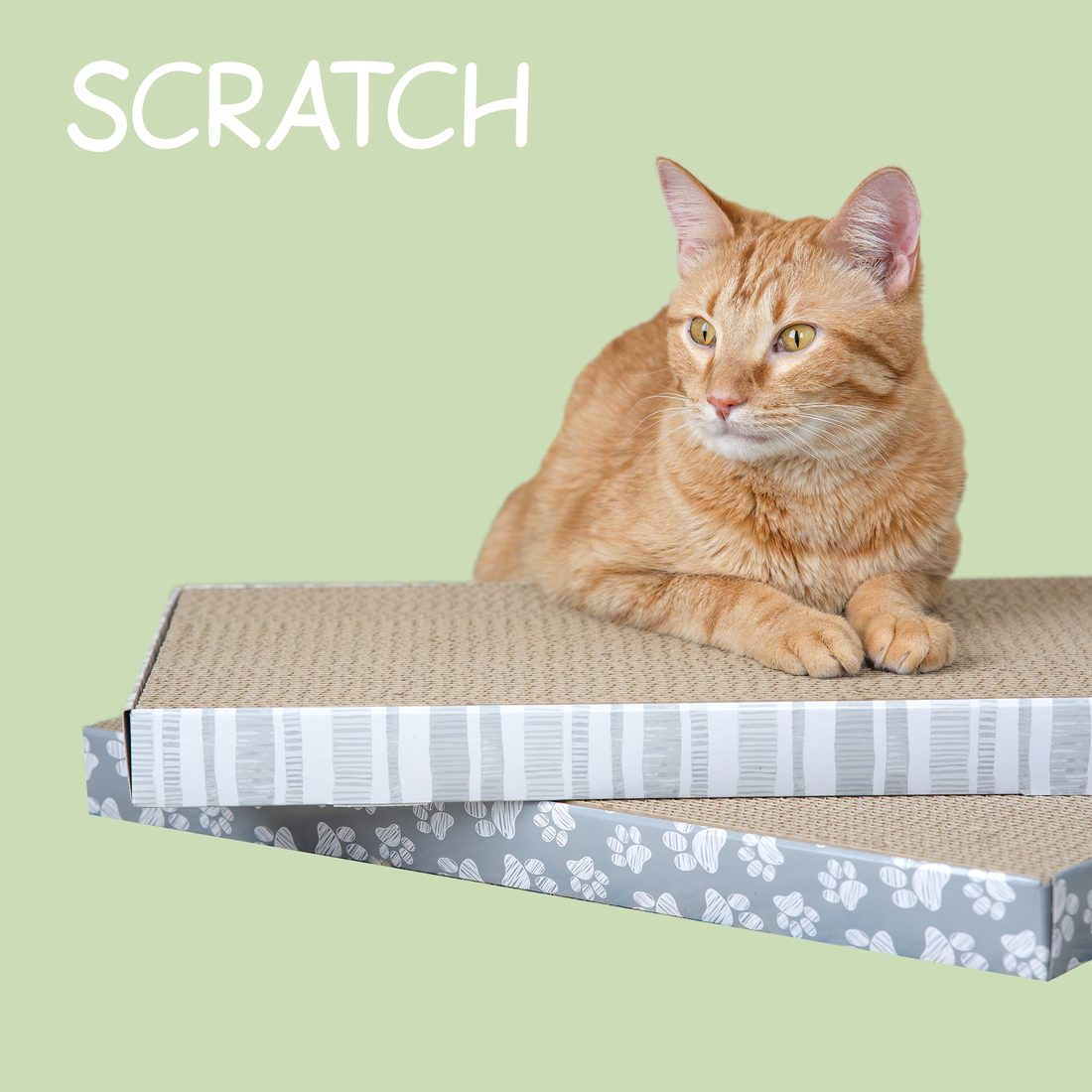
Why cats scratch
Scratching removes the dull outer sheath of each claw, stretches the whole body from shoulders to back legs, and leaves scent from glands in the paws. It isn't revenge on the couch — it's maintenance, and every feline does it, from kittens to seniors. You can't stop cat scratching, but you can choose where it happens.
So, do cat scratchers work?
Yes — when the cat scratcher is better than the furniture. Better means three things: in the same spot the cat already scratches, big enough for a full stretch, and solid enough not to slide or tip. Most "my cat ignores the scratcher" stories fail one of those tests. A scratcher tucked in a spare room loses to the sofa every time.
Horizontal or vertical
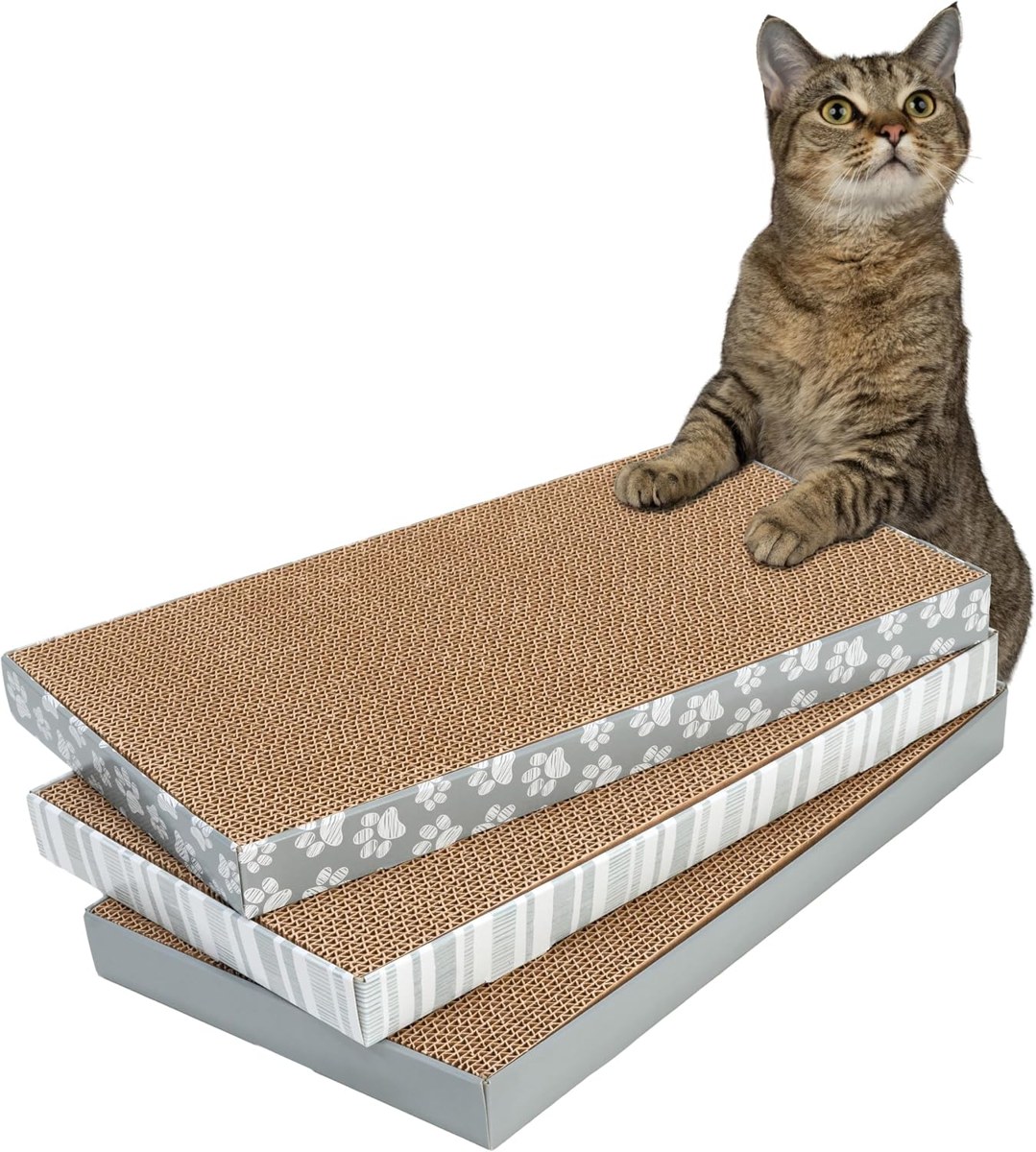
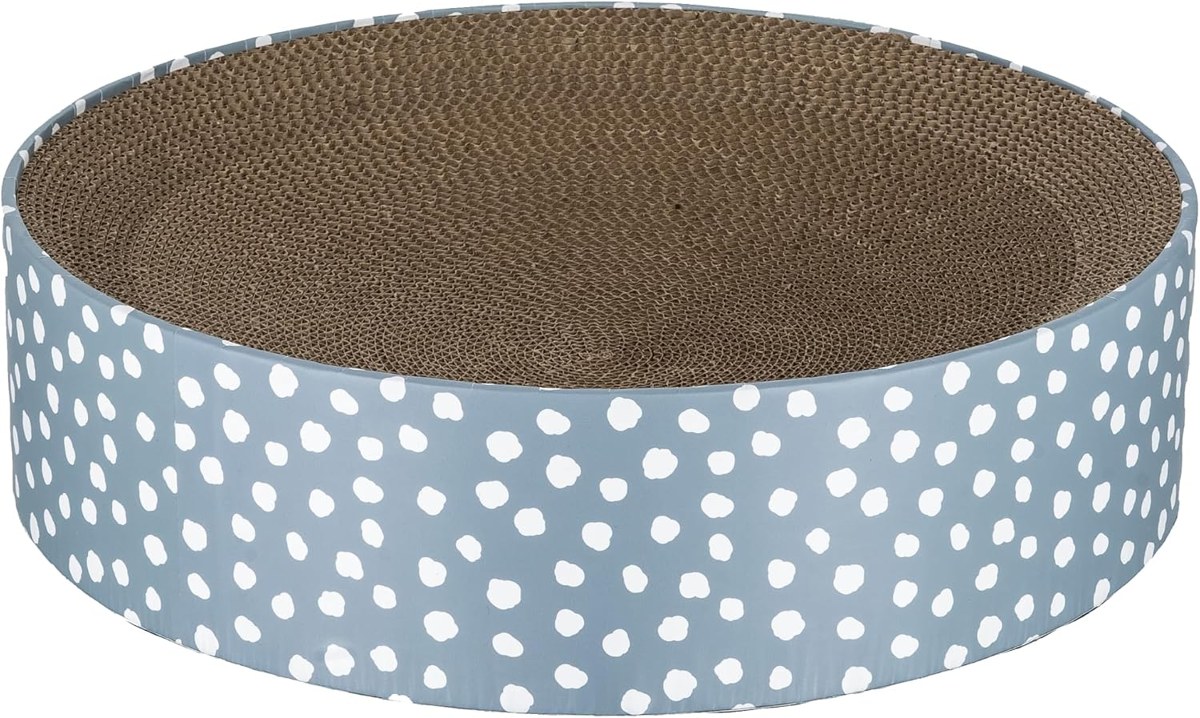
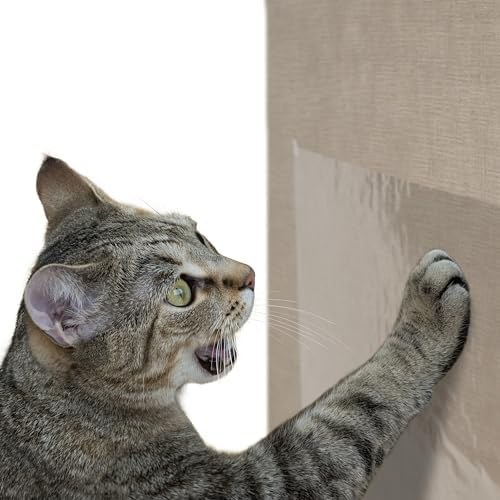
Some cats scratch lying down or stretched long on the floor; they shred rugs, doormats and stair carpet. Others stand up and pull down; they go for sofa arms, door frames, curtains and wall corners. A horizontal cat scratcher — a flat pad, a round lounger, a cardboard couch — suits the first group. A vertical post, a wall scratcher or a hanging board suits the second. Many cats use both, so a home with one of each rarely has problems.
Cardboard or sisal rope
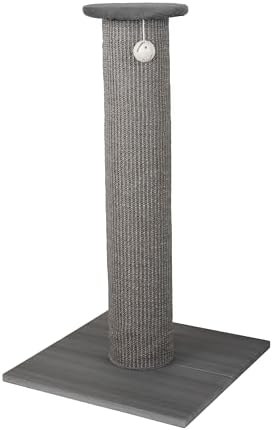
Corrugated cardboard is soft, crumbly and cheap to refill, and most cats take to it at once. Woven sisal rope is tough and durable and gives a strong cat something to really pull against. A cat tree usually wraps its legs in sisal; flat scratchers are almost always cardboard. Avoid carpet-covered scratchers: they teach a cat that carpet is the right material for claws.
How tall, how big
A post should be taller than your cat standing on its back legs — 28 to 32 inches tall suits most adult cats — and the base should be wide enough that it doesn't wobble. A flat pad should be longer than your cat stretched out. Large cats do best on XL pads and loungers they can stand on.
Cat tree, post or pad?
A cat tree gives scratching, climbing and a lookout or cat bed in one tower; it's great for cats that also want height. A single post or a pad is the smaller, cheaper fix when the only problem is the furniture. Start with the scratcher; add a tree if your cat keeps climbing the bookcase.
Where to put it
- Next to the piece of furniture that's being scratched.
- Near where your cat sleeps — cats scratch on waking.
- By the front door or a window, where cats like to mark territory.
- Not hidden in a corner nobody uses.
A four-week plan
- Week 1: place the scratcher right in front of the damaged spot and rub catnip on it.
- Week 1–2: cover the furniture spot with clear sticky sheets.
- Week 2–3: praise and treat every use; drag a wand toy across the scratcher.
- Week 4: move the scratcher a little away from the furniture and peel off the sheets.
Make it interesting
Some cats need a reason to walk over. Scratchers with a built-in toy — a ball in a track, a jingle ball, a dangling toy — combine play and claw care, and a cute shape or print keeps the scratcher where people actually sit.
When it doesn't work
The scratcher is too small, too wobbly, or in the wrong room. Cats won't use a pad that slides or a post that tips. A longer pad, a heavier base, a different material or a better spot usually fixes it. Keep the old, shredded scratcher next to the new one for a week — the familiar scent helps.